
Sunday Morning Coffee — May 17, 2026 — Triple Crown Adieu?
By Roy Berger, Las Vegas, NV
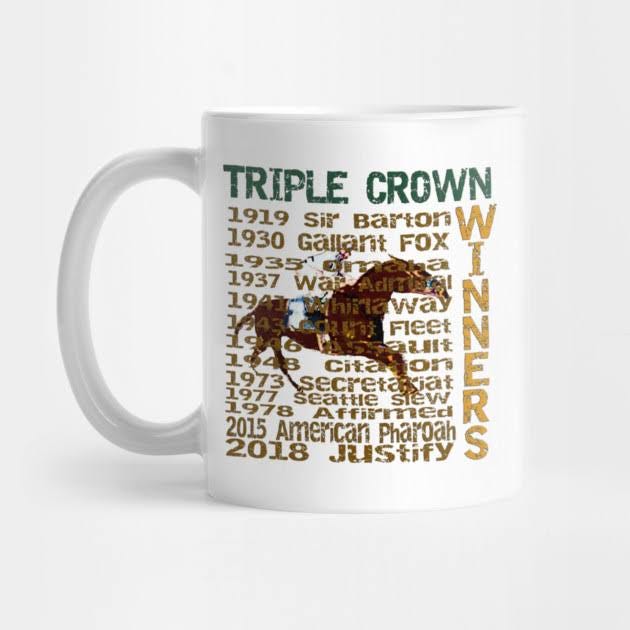
There was a horse race run Saturday in Baltimore. Once upon a time it mattered to even the most casual of American sports fans. But it doesn’t anymore.
It’s called the Preakness Stakes. It used to be a big deal in horse racing. But as horse racing has become as relevant in our society as pay phones, yesterday few even knew the race was run. And even fewer cared. And that is throwback sad.
The Preakness used to be my favorite race of horse racing’s Triple Crown series, which dates back to 1875 even though I don’t. It’s been contested every spring since. A sporting competition to determine the best three-year-old thoroughbred racehorse in the world. The Triple Crown formula was simple and familiar—the Kentucky Derby on the first Saturday of May; the Preakness two weeks later, then the Belmont Stakes three weeks after that. Win all three in five weeks and it’s equine legend. In fact, over that 151-year span since 1875 there have only been 13 horses that won all three legs. That is greatness by any measure. The first Triple Crown winner was Sir Barton in 1919 when Woodrow Wilson was our president; a steak dinner at a restaurant was seventy-five cents, the Dow was 107 and the average annual U.S. wage was about $1,200 a year.
Since Sir Barton 107 years ago there have been 12 additional Triple Crown winners. Overall that’s a mere eight percent of the Kentucky Derby winners that have gone on to Triple Crown fame. Or .66% of the 1,957 horses that have ever run in the Derby can call themselves a Triple Crown champion. The percentage declines year by year. Perhaps it’s unlikely ever to happen again. Back in the day, when the sport was the sport and sometimes, sadly, animal welfare issues took a back seat, the winner of the Kentucky Derby in Louisville was given a ticket for a van ride over to Pimlico Race Course in Baltimore and a saddle to defend in the Preakness. Win that one, take a three-week holiday and get ready for that day in the sun at Belmont Park on Long Island.
Two weeks ago yesterday, May 2, the Kentucky Derby was run for the 152nd time. Maybe you knew about it but a dollar to a bag of oats, you can’t tell me who won. And once the winner crossed the Derby finish line, yes, it was Golden Tempo, my attention used to go right to Baltimore to see if that winning horse can even hold a mouth-bit to the greatest of all-time, Secretariat, my horse.
But alas that’s not going to happen. Golden Tempo’s team almost immediately said a trip to Baltimore was not in the offing so the son of Curlin and Currumba had yesterday off. Golden Tempo’s trainer Cherie DeVaux, the first female to ever saddle a Kentucky Derby winner, and its ownership group decided to forego the Preakness and a chance for Triple Crown glory for a shady spot in the barn to prepare for the long and grueling Belmont Stakes on June 9. Sitting the Preakness out may not be in the public’s best interests but Golden Tempo’s team felt it certainly was for the welfare of their horse.
In fact, three of the past five years, the Kentucky Derby winner has taken a pass on the Preakness. Quality racehorses usually need about a month between starts. To train at the highest level and compete again in two weeks becomes borderline inhumane. Some have concluded the toll of racing in such a short window has become too steep and dangerous for the thoroughbreds health. The animals are trained at a level they have never experienced before to even become a Kentucky Derby contender. Qualify for the Derby and train ever harder. Then the pounding of the best two minutes in sports, the running of the Kentucky Derby, in front of 125,000 May partygoers and the chaos going on around the horses as their handlers try to get them in racing mode. That’s a lot for any three-year-old to try and handle.
When Secretariat won in 1973, he became the first Triple Crown winner in 25 years or since Citation in 1948, four years before I was born. Then back-to-back winners, Seattle Slew in 1977 and Affirmed the next year, fine racehorses but neither were Secretariat caliber. At least in my psuedo-fan book. We then waited another 37 years for a Triple Crown winner— American Pharoah in 2015 and Justify in 2018. Both were supposed to give racing a spotlight back on to our sports landscape but once the telecast ended, so did the conversation and any interest.
Back in the day, the 1940s, 50s and even into the mid and late 60s, horse racing used to be at the top of the American sports chain along with baseball and boxing. Professional football was just emerging; pro basketball was slow with little to no public appeal outside of an East Coast city or two; hockey a niche sport played then in only four U.S. towns and only as far west as Chicago. Nobody cared. Baseball was king; boxing on Wide World of Sports or the televised Friday Night Fights on the old Gillette Cavalcade of Sports a must watch, while horse racing still captured sporting types during the spring competition and then through the summer circuit especially at Saratoga, Santa Anita and Del Mar.
Since, boxing became overexposed and horse racing has all but faded away. A few racetracks remain around the country but most from the past are now warehouses, parking lots, casinos or on the verge of becoming a Chicago Bears football stadium. There will never be a new horse racing track built in this country again. The sport has no chance competing with lotteries, casinos, slot machines, at home gaming, thirty minutes between races and the public’s insatiable thirst for constant action. Racing generates none of that anymore. The core fan, from way back when, is either dead or on the doorstep.
Racing has tapped out but for one time a year, Kentucky Derby Saturday, when the sport gets briefly resuscitated but not for long. It’s just another excuse to party.
There is at least talk in thoroughbred circles of looking at easing the animals’ burden. Would an additional week between the Derby and Preakness, or three weeks, make a difference and encourage more Kentucky Derby winners to challenge in the Preakness? Then another three before the Belmont? According to top trainer Brad Cox, it won’t. “It’s not enough, no,” he told the New York Post succinctly last week.
Proof in the pudding, Saturday’s Preakness was won by Napoleon Solo, who didn’t race in the Kentucky Derby. Three horses from the Derby did run in the Preakness yesterday finishing fourth, fifth and ninth.
Which made Secretariat, and his 12 Triple Crown fraternity members, even greater. On May 5, 1973, the big red horse entered the Kentucky Derby as the favorite coupled with a stablemate Angle Light. Secretariat got out of the Louisville starting gate poorly, heated up and ran down the two front runners: Shecky Green, the horse not the Jewish comedian, and Sham to win by three lengths and set a Churchill Downs track record. Then a fortnight later to Baltimore, same pattern, come from behind, same winning margin as in Kentucky and set a stakes speed record. Ironically, the two horses that finished second and third to Secretariat in the Derby, Sham and Our Native, duplicated that once again on the Preakness surface.
Saturday, June 9, 1973, was Secretariat’s crowning moment. Belmont Park racetrack was maybe 15 miles from my front porch but I wasn’t going that day. Thought about it but I had something more important to do. I wanted to watch the race at home. With my grandmother.
Pauline Sachs, Mommy Paul to us, was 67 years old. An aggressive stomach cancer made it just a matter of time. She was visiting from her Manhattan apartment that weekend with my grandfather. I was 21, home between my junior and senior years at Miami. She wanted to talk Secretariat. So did the rest of the country. But my grandma wasn’t a horse racing fan, not by any means. This was a woman unlikely to be swept up in Big Red Fever. But she was. Mr. Ed take a back seat.
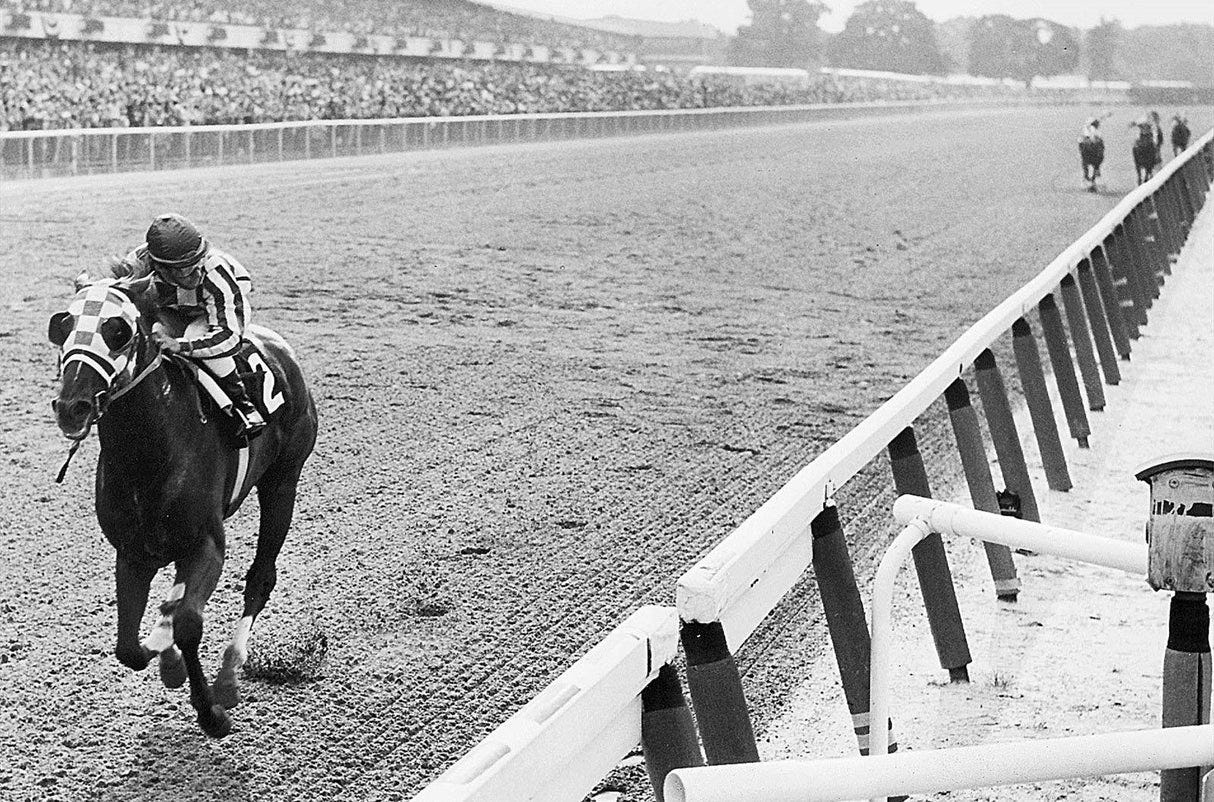
The Belmont Stakes of course was never in doubt. Only four other horses dared to challenge Secretariat that day. Instead, they should have stayed behind and ogled. Secretariat won by 31 lengths. On an American football field that’s 84 yards. It was classic. Just chilling to watch that level of greatness— it still is on replay. Even Sham approved, finally giving up chasing Big Red, finishing last in awe.
And we can argue great athletic performances all we want but for those two minutes and twenty-four seconds, over a mile and a half, still a track record that has never been beat, Secretariat was the greatest athlete, in terms of an athletic performance I’ve ever seen. Nothing or nobody even comes close.
But you know the best thing about that late spring afternoon? Not that Secretariat became the ninth winner of the Triple Crown. Not that no racehorse has ever run that distance faster. Or harder. Or more convincing. Not the noise coming from the grandstand when jockey Ron Turcotte guided Secretariat on his victory stampede. Whether you bet on him or not, all 80,000 were cheering down the stretch. Over 5,600 winning wagering tickets were never cashed, instead held for posterity or decades later an eBay auction.
The best thing I saw that 1973 day, this side of Secretariat’s heroics, was the smile on my grandmother’s face. I never saw it again. She died five months later. If horse racing never produces another Triple Crown winner, I’m okay with it. That day and that horse gave me something I’ll always treasure.

I’m proud that Medjet is sponsoring Sunday Morning Coffee. I spent 20 wonderful years with Medjet in Birmingham, Alabama, and can tell you unequivocally they are the standard-bearer for medical assistance membership programs. A talented staff, who cares about its members, is at the forefront of the company’s success. Whether you are traveling for business or pleasure, domestic or international, a Medjet membership should be an important part of your travel portfolio before you leave home. Check out the Medjet website at medjet.com or just tap on the Medjet logo and you’ll be able to get a look at Medjet’s services, rules and regulations, pricing, and an overview of the organization. And remember, any opinions expressed in Sunday Morning Coffee content or comments belong to the author and not the sponsor. Safe travels with your Medjet membership! — Roy Berger
Mommy Paul for the win! ❤️
Nostalgic. I watched Secretariat AND Mr. Ed!